Mood swings in women: the cycle, hormones and relief
Why mood shifts with your cycle and life stage: the hormonal and nutritional causes of mood swings in women, and what helps steady them.

Written and evidence-checked by the VeriNourish Editorial Team against 4 named sources listed below. No licensed clinician reviews this content.
Feeling calm one day and tearful or short-fused the next, often in a pattern tied to your cycle, is a real and common experience. Mood is closely linked to hormones, and once you see that connection the swings feel less bewildering and more manageable. The useful move is to work out which pattern you have, because that points straight to what helps.
Why mood shifts in women
Most mood swings in women trace back to a few overlapping drivers.
- The menstrual cycle. Estrogen and progesterone rise and fall across the month, and both influence brain chemicals like serotonin. The hormone drop in the days before a period is a classic trigger for irritability, anxiety and low mood. Our estrogen and progesterone guides explain what each one does.
- PMS and PMDD. For many women this is PMS. When premenstrual mood symptoms are severe enough to disrupt work or relationships, it may be PMDD, a more intense but treatable condition.
- Perimenopause. As hormones fluctuate more erratically in perimenopause, mood swings, irritability and low mood are common, and often missed as a hormonal symptom. The NHS lists mood changes, poor memory and brain fog among the recognized symptoms of perimenopause and menopause (NHS).
- Blood sugar, sleep and stress. Energy crashes from skipped or carb-heavy meals fuel irritability, poor sleep lowers your emotional resilience, and ongoing stress keeps the tank empty.
- Thyroid. An under- or overactive thyroid can affect mood, which is why it is worth ruling out if symptoms do not fit a clear cyclical pattern.
Telling the patterns apart
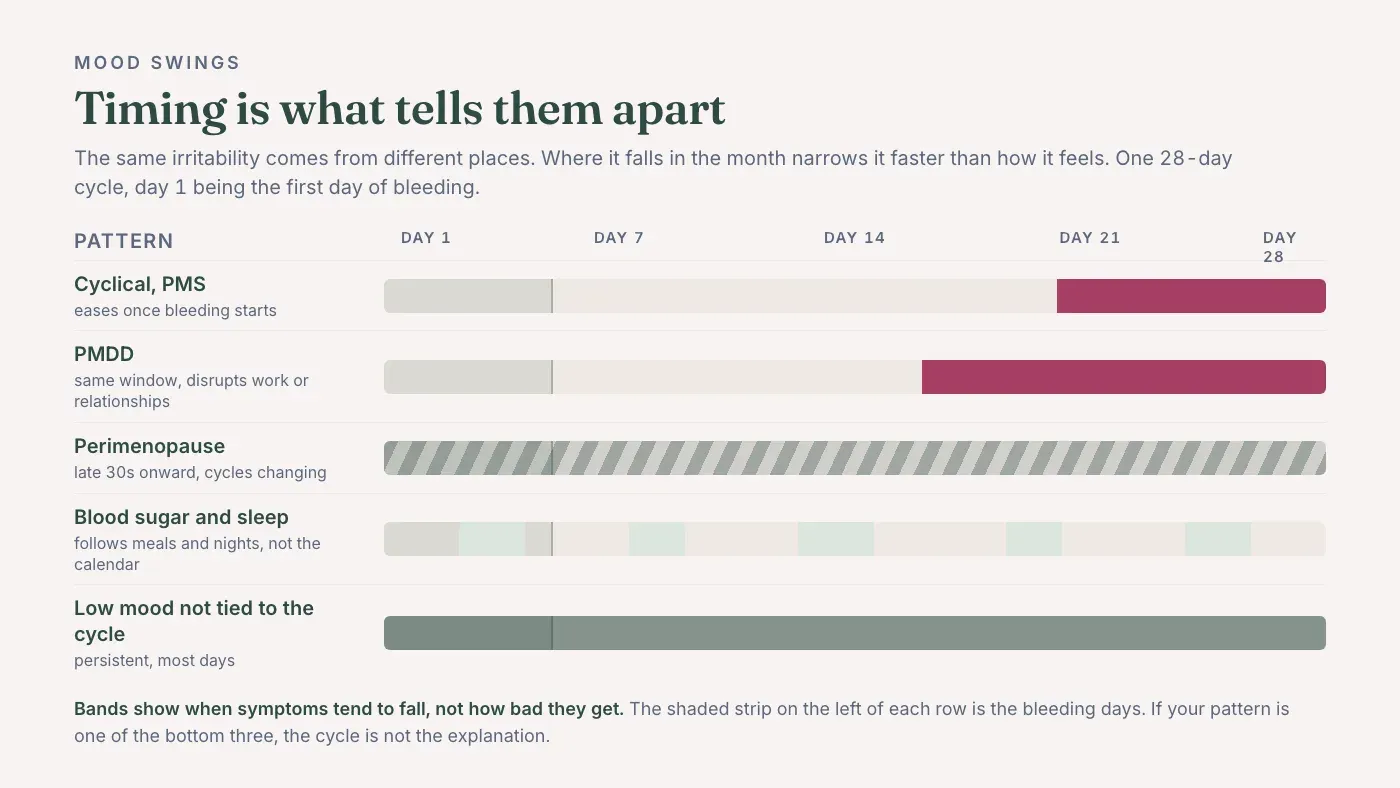
The same feeling, irritability or low mood, can come from different places. The timing usually gives it away.
| Pattern | What it tends to look like | First step |
|---|---|---|
| Cyclical (PMS) | Tension and low mood in the week or two before a period, easing once it starts | Track two cycles, steady blood sugar and sleep |
| PMDD | Intense premenstrual mood symptoms that disrupt work or relationships | Track two cycles and see a doctor; it is treatable |
| Perimenopause | More erratic mood with disturbed sleep and changing cycles, late 30s onward | Read our perimenopause guide, then talk to a doctor |
| Blood sugar and lifestyle | Short-fused or tearful after skipped or sugary meals, or on little sleep | Regular balanced meals, sleep, movement |
| Low mood not tied to the cycle | Persistent, most days, regardless of cycle phase | See a doctor; this is not only hormones |
Track it before you fix it
The single most useful thing you can do is keep a simple diary of your mood next to your cycle for at least two full cycles. Note the day of your cycle, your mood, sleep and anything notable. Two cycles is long enough to reveal whether your symptoms cluster before your period or run steadily throughout. That distinction changes everything: premenstrual symptoms are handled differently from mood that ignores your cycle, and a diary is also how PMDD is diagnosed. Our cycle calculator can help you keep track of the timing.
What helps steady mood
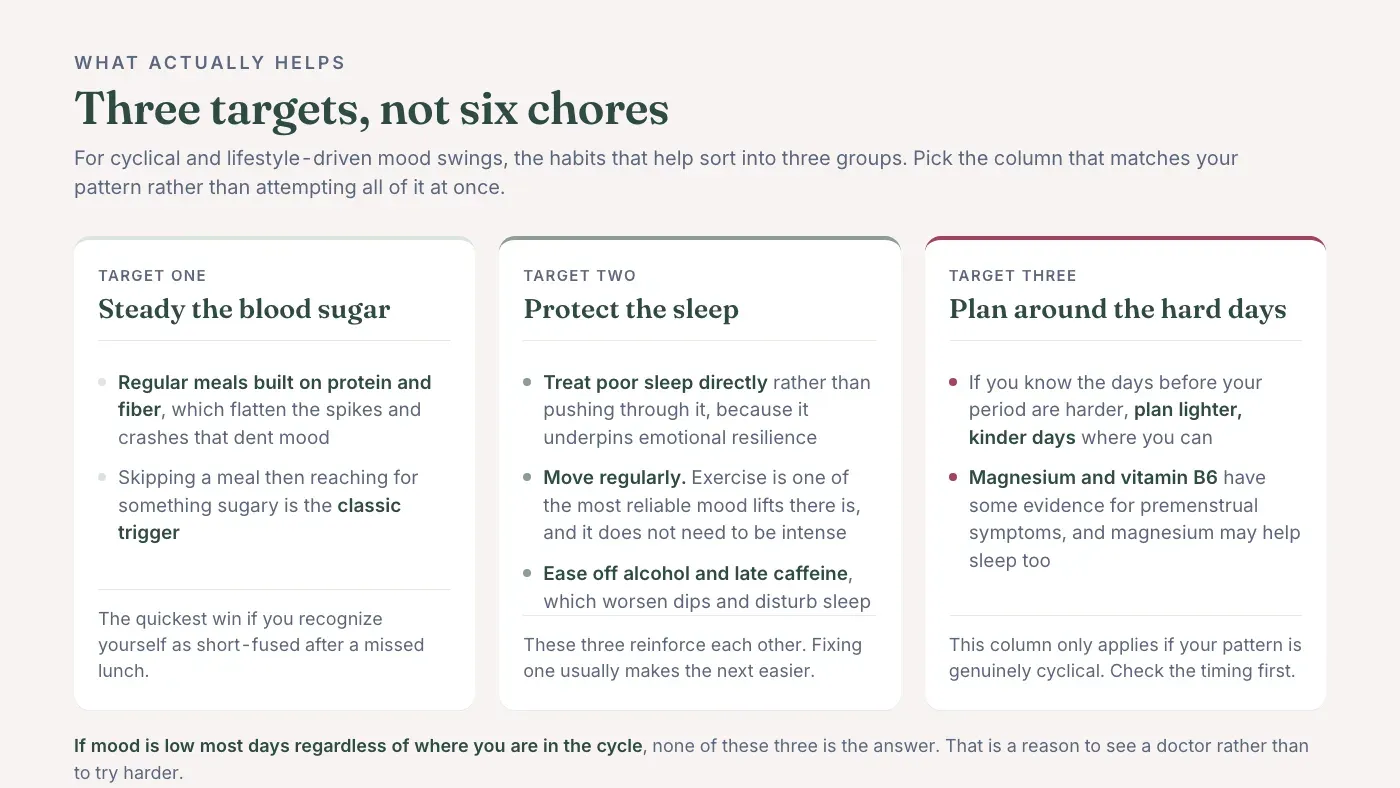
For cyclical and lifestyle-driven mood swings, a handful of habits do most of the work.
- Eat to steady blood sugar. Regular meals built on protein and fiber flatten the spikes and crashes that dent mood. Skipping meals then reaching for something sugary is a classic trigger.
- Consider magnesium and vitamin B6. Both have some evidence for premenstrual symptoms, and magnesium may also support sleep and relaxation.
- Protect your sleep. It underpins emotional resilience, so tackle any poor sleep directly rather than pushing through.
- Move regularly. Exercise is one of the most reliable mood boosters there is, and it does not need to be intense.
- Ease off alcohol and late caffeine. Both can worsen mood dips and disturb sleep, especially in the premenstrual week.
- Anticipate the tough days. If you know the days before your period are harder, plan lighter, kinder days where you can.
When it is more than mood swings
Mood swings are usually manageable, but some signs mean it is worth more than self-help. Premenstrual symptoms that regularly derail your work, relationships or sense of self point toward PMDD, which is treatable and not something to endure quietly. Mood that stays low most days regardless of your cycle, loss of interest in things you enjoy, or feeling hopeless are signs of depression or anxiety rather than hormones alone, and they deserve support in their own right.
When to see a doctor
See a doctor if mood symptoms are severe, persistent, or interfere with your life and relationships, or if you ever feel hopeless or unable to cope. Bring your two-cycle diary; it makes the conversation far more productive. Severe premenstrual mood symptoms and perimenopausal mood changes are both treatable, and support is genuinely available.
Frequently asked questions
Why do my moods change with my cycle?
Estrogen and progesterone rise and fall across the menstrual cycle, and both influence brain chemicals like serotonin that regulate mood. The hormone drop in the days before a period is a common time for irritability, anxiety and low mood, part of PMS for many women, and more severe in PMDD.
What's the difference between PMS and PMDD?
PMS covers the physical and emotional symptoms many women get before a period. PMDD, premenstrual dysphoric disorder, is a more severe form, with intense mood symptoms that disrupt daily life and relationships. It is diagnosed by tracking symptoms across cycles and it is treatable.
Can diet help mood swings?
Steadying blood sugar with regular, balanced meals helps avoid the irritability that comes with energy crashes. Some evidence supports magnesium and vitamin B6 for premenstrual symptoms, and a nutrient-dense diet supports mood overall. Cutting back on alcohol and late caffeine helps too.
How long should I track my mood to find a pattern?
Track your mood alongside your cycle for at least two full cycles. That is long enough to see whether symptoms cluster before your period, which points to PMS or PMDD, or run steadily regardless of cycle phase, which points elsewhere. A diary also makes any doctor's appointment far more useful.
When should I see a doctor about mood changes?
See a doctor if mood symptoms are severe, persistent, disrupt your life or relationships, or include feelings of hopelessness. Severe premenstrual mood symptoms and perimenopausal mood changes are both treatable, and low mood that runs regardless of your cycle deserves attention in its own right.
References
- Symptoms of menopause and perimenopause · NHS
- Premenstrual syndrome (PMS) · Office on Women's Health
- Menopause: Symptoms · NHS
- Premenstrual syndrome (315) clinical guideline · NHS Scotland