Calcium for women: how much you need and the best sources
An evidence-based guide to calcium for women. How much you need at each age, why it matters for bone health, food versus supplements, and how to take it safely.

Written and evidence-checked by the VeriNourish Editorial Team against 4 named sources listed below. No licensed clinician reviews this content.
Calcium is the mineral most tied to women's long-term bone health, and it becomes more important, not less, with age. Women lose bone faster than men after menopause, so getting enough through the decades is one of the more concrete things you can do for your skeleton. The aim is to hit your target, mostly from food, without overdoing supplements.
Why calcium matters for women
About 99 percent of your body's calcium is stored in bones and teeth, where it gives structure and strength. The rest works in muscles, nerves and blood. If you do not get enough from food, your body pulls calcium out of bone to keep those functions running, which weakens the skeleton over time.
Women are especially exposed to this. Bone density peaks in early adulthood and then declines, and the fall in estrogen at menopause speeds bone loss sharply. Enough calcium, combined with vitamin D and exercise, helps slow that loss.
How much you need
These are the US reference intakes, set by the NIH Office of Dietary Supplements:
| Age or stage | Calcium a day |
|---|---|
| 19 to 50 | 1000 mg |
| Over 50 | 1200 mg |
| Teenagers (9 to 18) | 1300 mg |
| Pregnancy and breastfeeding | Same as your age-group target |
The UK figure is lower, and the gap is large enough to matter. The NHS sets 700 mg a day for adults aged 19 to 64 and over, and says most people should get all of it from a varied diet (NHS). So a woman reading a US target may believe she is short when her own country's guidance says she is not. Follow the advice for where you live, and if you are unsure, ask your doctor which figure applies to you.
These totals include calcium from food and supplements combined, which is why your food intake decides whether you need a supplement at all. Calcium works with vitamin D, and that one is harder to get from food, so it is worth checking your daily figure with our vitamin D calculator.

Food sources
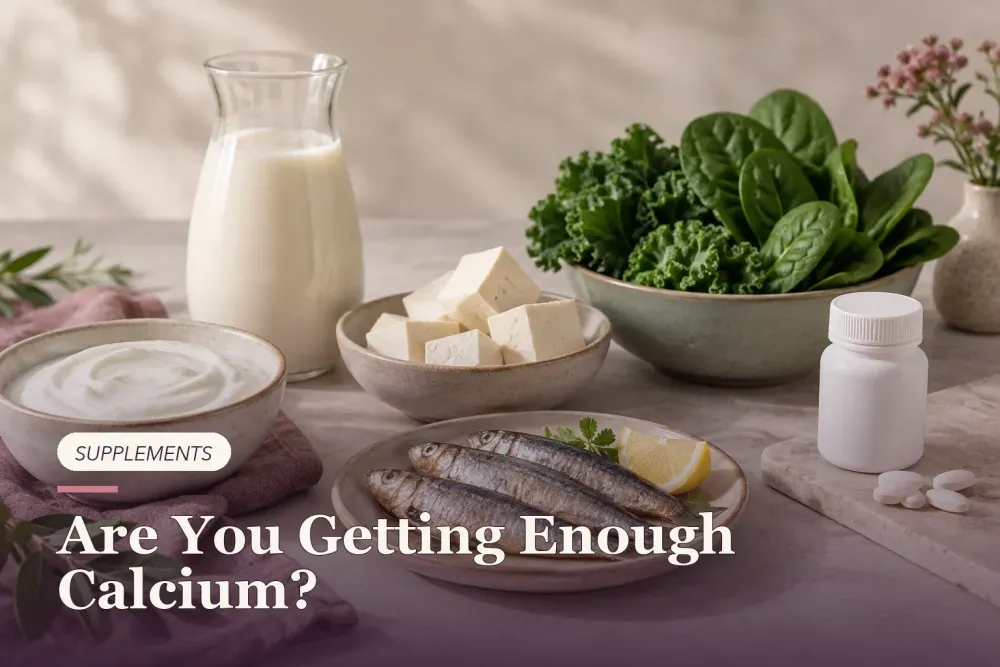
Food is the best route, since calcium comes packaged with other useful nutrients. Good sources include:
- Dairy: milk, yogurt and cheese
- Fortified plant milks and juices
- Canned fish with soft edible bones, like sardines and salmon
- Tofu set with calcium
- Leafy greens such as kale and pak choi, and some beans
Many women can reach the target from food with a bit of planning.
Calcium, vitamin D and bones
Calcium does not work alone. Your body needs vitamin D to absorb it, which is why the two are so often paired for bone health. Weight-bearing and resistance exercise add the third piece, signaling bone to stay strong. Around and after menopause, this trio (enough calcium, enough vitamin D and regular strength work) is the practical core of protecting your bones.
Supplements: if and how
A supplement makes sense when you genuinely cannot meet the target from food, for example if you avoid dairy and do not eat fortified alternatives. If you do use one:
- Do not aim for a huge dose. Top up the gap between your food intake and your target, rather than taking the full amount as a pill. The NHS says 1,500 mg a day or less from supplements is unlikely to cause harm, and that going above that can cause stomach pain and diarrhea (NHS).
- Split larger doses. The body absorbs calcium better in amounts of around 500 mg or less at a time, so spread it across the day.
- Check the form. Calcium carbonate is best taken with food; calcium citrate can be taken with or without.
More is not better, and it is worth being clear about how much a supplement actually buys you. Reviews of calcium plus vitamin D in postmenopausal women find the effect on bone density and fracture risk is small and varies between groups, while supplement users show a slightly raised rate of kidney stones: in one 7-year follow-up, one extra urinary stone was diagnosed for every 273 women supplemented (Indian J Endocrinol Metab, 2013). That is the case for filling a real gap from food rather than taking calcium by default. Adults should stay under roughly 2000 to 2500 mg a day from all sources combined.

When to see a doctor
See your doctor if you have risk factors for osteoporosis, such as early menopause, a family history or long-term steroid use, if you cannot meet your calcium needs from food, or before starting high-dose supplements. They can check whether a bone density scan or a tailored plan makes sense for you.
Frequently asked questions
How much calcium do women need?
Most women aged 19 to 50 need about 1000 mg of calcium a day. This rises to 1200 mg for women over 50, when bone loss speeds up after menopause. Teenagers need around 1300 mg. These targets include calcium from both food and any supplements.
Why is calcium important for women?
Calcium is the main mineral in bone, and women are more prone to osteoporosis than men, especially after menopause when falling estrogen accelerates bone loss. Getting enough calcium, alongside vitamin D and weight-bearing exercise, helps protect bone strength for later life.
Is it better to get calcium from food or supplements?
Food first. Dairy, fortified plant milks, canned fish with bones, tofu set with calcium, and leafy greens provide calcium along with other nutrients. Supplements are useful if you cannot meet the target from food, but very high supplement doses are not better and may carry risks.
Can you take too much calcium?
Yes. Adults should stay under about 2000 to 2500 mg a day from all sources. Very high intakes, mostly from supplements, are linked with kidney stones and other problems, and taking large single doses is less well absorbed than spreading calcium across the day.
References
- Calcium and vitamin D in post menopausal women · Indian Journal of Endocrinology and Metabolism, 2013
- Calcium: fact sheet for health professionals · NIH Office of Dietary Supplements
- Calcium: fact sheet for consumers · NIH Office of Dietary Supplements
- Calcium · NHS